

The Ultimate Wedding Venue Decor Guide: How to Style Your Space With Confidence
A practical Singapore guide to venue fit, lighting, weather, guest flow, setup timing, quote comparison and wedding decor budget.
28 Aug 2026

Wedding venue decor should make a room feel more intentional, not simply more decorated. Yet many couples begin with saved arches, flower clouds, candlelit aisles and elaborate stages before checking whether the venue can support them. A beautiful reference can become an expensive compromise when the actual room has a low ceiling, narrow service routes, fixed screens or a short setup window.
Planning wedding venue decor in Singapore therefore starts with the room. Architecture, light, guest flow, venue restrictions and weather exposure determine which ideas will have impact and which will create friction.
At Weddingserv, one recurring comparison problem is that couples evaluate visual proposals before normalising the practical scope behind them. This guide reverses that order. It explains how to assess the venue first, set priorities and compare decor proposals with clearer criteria.
Explore wedding decor: Browse Decor products and venue styling packages on Weddingserv. When the venue constraints are clear, continue with the Wedding Decor Style Guide Singapore to choose a coherent visual direction.
Wedding Venue Decor Guide: The Quick Planning Checklist
Before choosing flowers or colours, confirm the conditions that will shape the design. These questions turn inspiration into an executable plan.
| Venue factor | Why it matters | What to confirm |
|---|---|---|
| Indoor or outdoor | Changes the weather, power and material requirements | What is the rain plan, and when is it activated? |
| Ceiling and rigging | Determines whether hanging decor and tall structures are possible | Are there approved rigging points, height limits and engineering requirements? |
| Existing interiors | Carpets, walls, chandeliers and chairs affect the palette | What cannot be removed, covered or repositioned? |
| Lighting | Controls atmosphere and how florals appear in photos | Which house lights are dimmable, and are extra fixtures allowed? |
| Guest layout | Affects centrepiece scale, aisle width and service flow | How many tables, seats and access routes must remain clear? |
| Setup window | Sets the realistic complexity of the installation | When can vendors load in, finish setup and begin teardown? |
| Restrictions | Protects safety, property and venue operations | Are candles, confetti, adhesives, drilling or haze prohibited? |
Treat this list as the foundation of the brief. It is easier to design creatively inside known boundaries than to approve a concept and discover later that its defining feature cannot be installed.
The Weddingserv SPACE Framework for Planning Wedding Venue Decor
Use SPACE before approving a mood board or requesting quotations. It turns a visually appealing idea into five practical tests.
| Letter | Decision question | What it reveals |
|---|---|---|
| S - Space and sightlines | What do guests see from the entrance, stage and furthest table? | Where scale and focal points matter most |
| P - Practical restrictions | What are the rules for rigging, flames, adhesives, power and loading? | Which concepts can be installed safely and legally |
| A - Atmosphere and lighting | How should the room feel during ceremony, dinner and speeches? | Whether lighting or additional decor creates more value |
| C - Crowd flow and comfort | How will guests, servers and vendors move through the room? | Safe aisle widths, centrepiece scale and wayfinding needs |
| E - Execution and expenditure | How much setup time, labour and budget are available? | Whether the design is realistic at the required finish |
Apply the framework in order. A concept that fails the practical restrictions or crowd-flow test should be revised before pricing. A concept that passes all five tests is easier for vendors to quote accurately and easier for the couple to defend when the budget changes.
Wedding Venue Decor: Why the Venue Comes Before the Mood Board
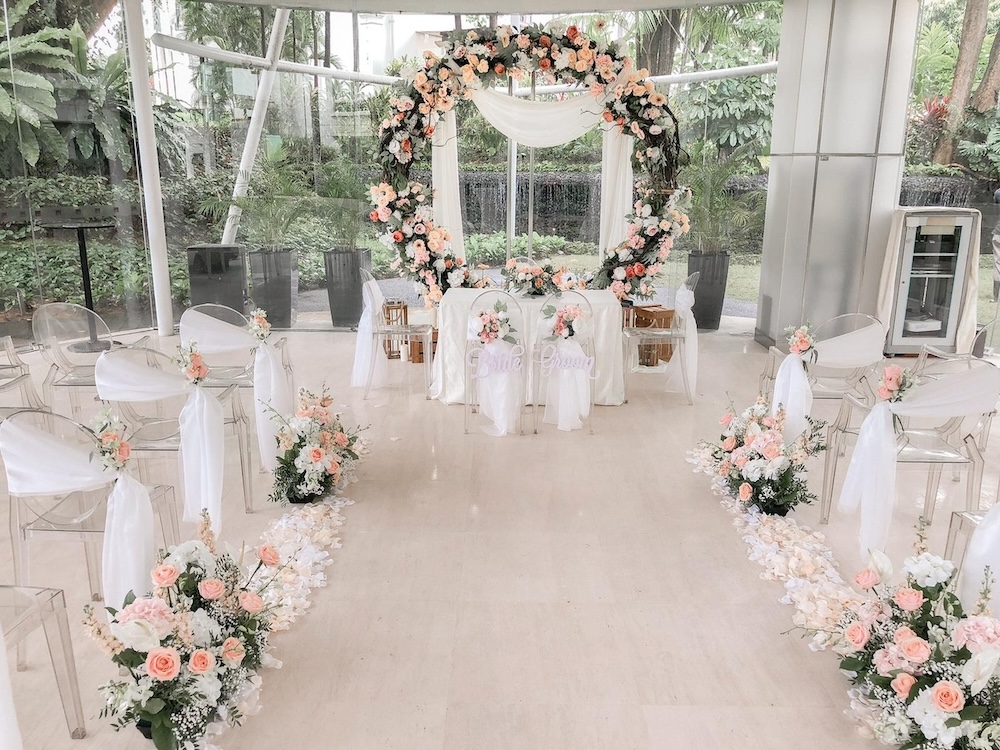
A mood board communicates taste; the venue decides scale. The same arrangement can look balanced in one room and lost or overwhelming in another. High ceilings can swallow low centrepieces. Strong patterned carpets can compete with a delicate pastel palette. A compact restaurant can feel crowded when a backdrop, photo booth and gift table are all added to the entrance.
Begin with a visual audit. Stand at the guest entrance and note what people see first. Walk the route to the ceremony or ballroom. Look toward the stage from the furthest table. Check where daylight enters and where the room becomes dark. Photograph any permanent features that will remain visible, including walls, carpets, columns, chandeliers, curtains and built-in screens.
Then ask what the room actually needs. An ornate hotel ballroom may need restraint, warmer lighting and better-proportioned tables rather than more decorative layers. A plain function room may need one strong stage or ceremony structure to create focus. A garden may already provide texture and colour, so shade, weather resilience and guest comfort deserve more budget than extra greenery.
This venue-first method also improves vendor conversations. Instead of asking for a generic "romantic" proposal, you can explain which areas feel empty, which finishes need balancing and which existing features should remain prominent. The design becomes a response to the space, not a collage of unrelated references.
Wedding Venue Decor Ideas by Singapore Venue Type
Singapore weddings take place in rooms with very different demands. A suitable style is not only the one you like; it is the one the venue can carry naturally.
| Venue type | Wedding venue decor priorities | Common risk |
|---|---|---|
| Hotel ballroom | Stage, guest-table scale, aisle definition and layered lighting | Competing with carpet patterns, low ceilings or fixed screens |
| Restaurant | Compact florals, table details, entrance signage and warm light | Blocking service routes or overcrowding tables |
| Outdoor solemnisation | Grounded ceremony structure, shade, fans and weather-ready materials | Heat, rain, wind and an unclear relocation plan |
| Glasshouse | Day-to-night lighting, transparent textures and selective greenery | Harsh daylight followed by a flat-looking evening setup |
| Church | Altar flowers, pew ends, aisle restraint and quick-change elements | Venue rules, limited setup time and decor that distracts from the setting |
| Rooftop or poolside | Weighted arrangements, safe cable management and visible wayfinding | Wind, wet surfaces, safety barriers and guest discomfort |
| Heritage venue | Architecture-led styling, freestanding structures and careful colour selection | Attaching decor to protected surfaces or concealing the venue's character |
Use the venue's strongest feature as a starting point. A chandelier can anchor a ballroom layout. A garden view can become the ceremony backdrop. Architectural arches may make a separate floral arch unnecessary. When decor complements what is already present, the result often looks more refined and costs less than trying to transform every surface.
Once these constraints are clear, use the companion Wedding Decor Style Guide Singapore to decide whether classic, romantic, garden, minimalist, luxury or editorial styling belongs in the room.
How Singapore Weather Affects Your Wedding Venue Decor
Weather planning is part of design in Singapore. According to the Meteorological Service Singapore, the country averages 171 rain days a year, while long-term mean annual rainfall for 1991 to 2020 was 2,113.3 millimetres. Mean monthly relative humidity is also consistently high. An outdoor wedding therefore needs more than a hopeful backup sentence in the contract.
Heat and humidity influence flowers, fabric, candles, printed materials and guest comfort. Delicate blooms may open or soften faster in direct sun. Lightweight signage can move in wind. Fabric draping can cling, crease or become heavy. Wax candles may be unreliable outdoors, while electrical fixtures and cables need an appropriate wet-weather plan.
Ask the florist which flowers suit the exposure and how long they will remain outside before guests arrive. A thoughtful mix of fresh, preserved and high-quality artificial elements can give vulnerable areas more stability without making the entire design feel artificial. Structures should be properly weighted, and aisle markers should not become trip hazards if the ground is damp.
The wet-weather plan should name the decision-maker, decision time, relocation route and alternate layout. If an outdoor solemnisation moves indoors, will the arch fit the backup room? Can the signing table, aisle flowers and chairs be repositioned within the remaining setup window? Who protects the decor during the move? A backup plan is only useful when it is operational.
Guest comfort belongs in the decor brief too. Shade, fans, water stations, non-slip routes and clear signs may not appear on the mood board, but they shape how the celebration feels. Beautiful styling cannot compensate for guests squinting into the sun or wondering where to go when rain begins.
Wedding Venue Lighting: The Highest-ROI Decor Decision
Lighting changes how every other decor element performs. Flowers, linens and backdrops can look rich under warm, controlled light and flat under harsh general illumination. Before adding another layer of florals, ask whether better lighting would improve the entire room more effectively.
Imagine the same ballroom in two states. In the first, bright cool-white ceiling lights remain fully on. The stage is visible, but the flowers look pale, the tables feel functional and guests are lit unevenly. In the second, the general light is lowered, warm wall washes give the room depth, pin spots reveal the centrepieces and balanced front light keeps faces clear on stage. No flower has changed, yet the room feels more polished and photographs more coherently.
Lighting should be designed by zone and event phase. A ceremony needs flattering face light and enough illumination for vows and signing. Dinner needs warm ambient light without making menus unreadable. Speeches need consistent front light. Dancing may require movement and contrast, while photographers and videographers need to know when dramatic lighting will replace neutral coverage.
Decor and photography should therefore be planned together. The wedding photography styles guide explains how timeless, editorial, cinematic and photojournalistic approaches respond differently to lighting, scale and atmosphere.
| Wedding moment | Lighting priority | Planning question |
|---|---|---|
| Daytime solemnisation | Shade and natural-light control | Will the couple or guests face direct sun? |
| Ballroom entrance | A focused pathway and stage visibility | Can house lights dim without darkening the couple's route? |
| Dinner | Warm ambient light with readable tables | Are centrepieces lit, or will their colour disappear? |
| Speeches | Balanced front light | Will faces remain clear for guests, photos and video? |
| Photo area | Soft face-level light | Can guests take flattering photographs without phone flash? |
| Evening outdoor event | Weather-safe ambient and route lighting | Are paths, steps and cables safe after dark? |
What a Wedding Lighting Quote Should Include
Do not compare lighting quotes by fixture count alone. Ask whether the scope includes fixtures, stands or rigging, cabling, power distribution, control equipment, programming, delivery, setup, focusing, an operator, teardown and overtime. Some venues require their in-house technical team for certain connections or rigging; that cost may appear separately.
There is no responsible universal price for "wedding lighting" because a warm wash in a small restaurant is a different job from lighting a ballroom stage, twenty tables and a dance floor. Compare the zones covered and the labour required. A lower quote that leaves the stage underlit may be poor value even if it includes many decorative fixtures.
How to Test Wedding Venue Lighting Before the Day
During a venue visit, ask to see the room at the same time of day as the wedding. Photograph the stage, tables and ceremony position with the likely house-light settings. If possible, request a lighting plan that identifies fixture positions and intended colours. Avoid extreme coloured washes over faces and food; use colour to shape the room while keeping key people and dining areas natural.
Lighting is not a decorative afterthought. It is the visual system that connects the stage, florals, tables and photography.
How Ceiling Height and Venue Rules Affect Wedding Decor
Ceiling height changes proportion. In a low room, dense hanging decor, tall centrepieces and heavy draping can make the space feel compressed. Use lower arrangements, cleaner vertical lines, wall washes and a strong eye-level focal point instead. In a high ballroom, very small arrangements may disappear; varied centrepiece heights, a wider stage composition or a carefully planned overhead element can restore scale.
Rigging must be confirmed, not assumed. Ask whether approved points exist, who may use them, what weight limits apply and whether structural documentation or venue-approved contractors are required. Freestanding alternatives may be more practical when ceiling access is restricted, but their bases, ballast and emergency clearance still need planning.
Safety rules also shape the floor plan. Singapore Civil Defence Force means-of-escape requirements require exits to be readily accessible and unobstructed while a building is occupied. Your venue remains the authority on the exact layout, approvals and operational rules. Confirm that arches, photo walls, floral stands, cables and gift tables do not narrow required routes or conceal fire-safety equipment.
Other common restrictions concern open flames, confetti, haze, adhesives, drilling and late-night teardown. Obtain written confirmation before the vendor orders materials. A concept that depends on a prohibited technique is not a final design.
How Guest Count Should Shape Your Wedding Venue Decor
Guest count multiplies decor. A seemingly small upgrade becomes significant when repeated across many tables, chairs or place settings. For example, 200 guests seated ten to a table require about 20 tables. Adding S$50 of decor to every centrepiece adds S$1,000 to the total before delivery or labour. This simple calculation is one of the fastest ways to test whether a detail is truly a priority.
Small celebrations can invest in intimacy: layered place settings, individual menus, candlelight and detailed table flowers. Large banquets need visibility and rhythm. The stage, entrance and centrepieces must read from a distance, while repeated elements should remain efficient to install and clear for service.
| Guest count or layout | Best decor emphasis | Avoid |
|---|---|---|
| Intimate restaurant wedding | Table detail, warm light and one compact focal point | Bulky structures that reduce circulation |
| Mid-sized solemnisation | Ceremony frame, aisle, signing table and comfort features | Styling only the front row while ignoring guest exposure |
| Large ballroom banquet | Stage scale, lighting, entrance and visible centrepieces | Tiny details that cannot be seen beyond one table |
| Long tables | Low continuous styling and repeated candle rhythm | Tall arrangements that interrupt conversation |
| Round tables | Proportional centrepieces with considered height variation | Overfilled tables with no space for shared dishes or service |
Guest flow matters as much as guest count. Trace the routes used by servers, elderly guests, wheelchair users, photographers, the wedding party and the couple's entrance. Decor should frame movement, not compete with it.
Wedding Venue Decor Focal Points: What to Prioritise First
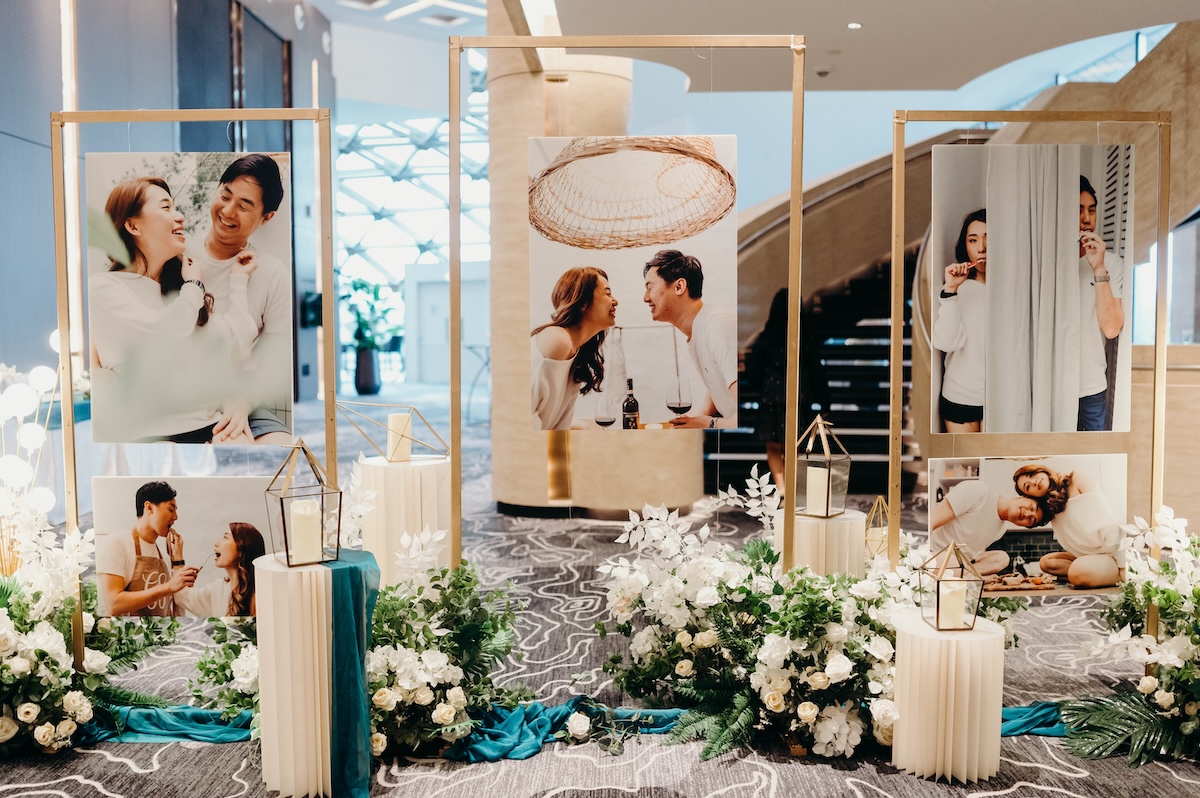
Focal points are the areas that carry the visual story. Trying to decorate every wall usually weakens the budget. A hierarchy gives the room clarity and directs spending toward moments guests will notice.
Priority 1: Ceremony or Stage
This is where vows, speeches, portraits and much of the formal programme happen. It should suit the width of the room, leave faces well lit and avoid visual clutter behind the couple. In venues with a beautiful natural view or architectural feature, framing may be more effective than covering.
Priority 2: Guest Tables
Guests spend a large part of the celebration seated. Centrepieces, linens, menus and light are experienced at close range, so comfort and proportion matter. Check sightlines, shared-dish space and conversation clearance before increasing floral height or volume.
Priority 3: Entrance and Wayfinding
The entrance sets the first impression and helps guests orient themselves. A welcome sign, seating information and one coherent styling moment can do more than multiple props. Keep registration and queueing space clear.
Priority 4: Photo or Cocktail Area
Add a dedicated photo backdrop only when the venue lacks a naturally attractive location and guests will genuinely use it. Good face lighting and enough standing distance are more important than a dense background.
Priority 5: Ceiling and Perimeter Details
Hanging decor, wall treatments and scattered corner styling come after the core experience. They can be transformative in the right room, but they often require more labour, approval and teardown time. Fund them only when the earlier priorities are already coherent.
This order is a decision framework, not a rule that every wedding must follow. A ceremony-only celebration may place the aisle above tables. A dinner with no formal stage may direct more budget to guest areas. The point is to rank the moments deliberately.
Wedding Venue Decor Setup Times and Access Planning
Setup time determines design complexity. As a planning benchmark, not a guaranteed industry average, allow roughly two to four hours for a simple restaurant or solemnisation setup, four to six hours for a multi-zone ballroom, and eight to twelve hours or more for a custom build, large hanging installation or complex technical setup. The actual requirement depends on loading access, crew size, venue rules and whether other vendors are working in the room.
Build the schedule backwards from the moment the venue must be guest-ready. Include unloading, lift queues, floor protection, structure assembly, flowers, table dressing, lighting focus, safety checks, photography of the completed room and cleanup of packaging. A vendor who is given four hours does not have four hours of uninterrupted decorating.
Confirm access in writing. Ask when the previous event ends, whether the room will be reset before decor begins, which loading bay and lift vendors use, where vehicles may wait, and when teardown must finish. Clarify overtime charges and who approves additional hours.
For outdoor weddings, include a weather decision point. For shared venues, include a handover check. For complex structures, allow inspection time before guests enter. A realistic production schedule protects the concept and reduces last-minute improvisation.
How to Brief a Wedding Decor Vendor
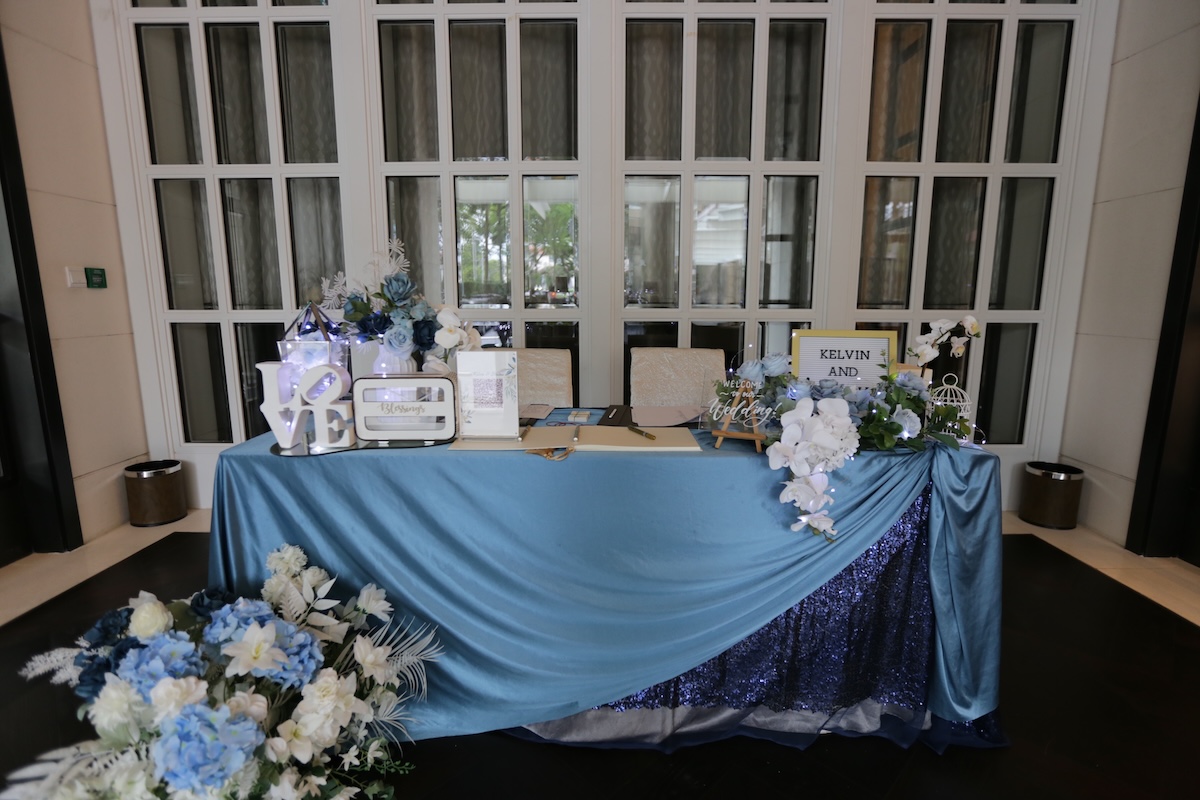
A useful brief explains the event, the room and the priorities. "Elegant and romantic" is a mood; it is not enough information for an accurate proposal.
Provide the venue and room, date, event timing, guest count, floor plan, table format, indoor or outdoor conditions, venue restrictions, setup access and budget range. Identify the ceremony, dinner and photo zones. Share reference images with notes about what you like in each one: shape, colour, texture, lighting or level of fullness.
Also identify what is not required. If you prefer a strong stage and simpler entrance, say so. If fresh flowers matter at guest eye level but artificial greenery is acceptable overhead, explain that distinction. Clear priorities allow vendors to recommend trade-offs instead of guessing where to reduce scope.
Ask for one lead contact, a revision process and a final approval date. The completed brief should be specific enough that another person could understand the intended experience without seeing your entire inspiration folder.
How to Compare Wedding Venue Decor Quotations
Decor quotations often look incomparable because vendors group work differently. One may bundle design, florals, props and labour. Another may list every vase and stand. A third may price a standard package before customisation. Compare scope before comparing totals.
| Quote component | What to check | Why it changes value |
|---|---|---|
| Design and planning | Consultation, venue visit, drawings and revision rounds | Determines how much custom thinking is included |
| Florals and greenery | Fresh, preserved, artificial or mixed; varieties and volume | Changes appearance, durability and labour |
| Structures and props | Size, finish, rental period, ballast and approvals | Affects scale, transport and safety |
| Lighting | Zones, equipment, programming and operator time | Determines whether the decor reads properly in the room |
| Labour and logistics | Crew, transport, loading, setup and teardown | Complex venues can require substantial behind-the-scenes work |
| Exclusions | Power, venue technicians, overtime, permits and damage deposits | Reveals costs that may appear later |
Request an itemised scope even when the vendor offers a package. Check whether images are concept references or exact commitments. Confirm what happens if a flower variety is unavailable, the floor plan changes or rain forces relocation. The strongest quotation is not necessarily the cheapest; it is the one that clearly matches the brief and leaves the fewest costly assumptions.
Real Weddingserv Example: How Two Solemnisation Decor Packages Differ
Package names do not reveal scope on their own. A current one-vendor snapshot from Rosette Events shows why couples should translate every quotation into common rows before comparing price.
| Current listing | Listed price | Scope difference |
|---|---|---|
| Standard Solemnisation Decor Package | S$1,500 | Backdrop, ROM centrepiece, two bride-and-groom chair signs, two floor-flower arrangements, manpower and delivery |
| Premium Solemnisation Decor Package | S$2,100 | Backdrop, ROM centrepiece, couple-chair decor, six aisle posies, four floor-flower arrangements, manpower and delivery |
Both listings use premium faux flowers and state that five white Tiffany chairs are excluded, with additional chairs separately priced. The S$600 difference is therefore not simply a change from "standard" to "premium"; it buys more aisle and floor styling. A couple who values a fuller processional view may find that useful. A couple whose venue already has a strong aisle may prefer to direct the difference toward lighting, table styling or weather contingency.
This is a scope-normalisation example, not a market-price benchmark. Listings were checked on 28 July 2026 and may change. Verify current pricing, GST treatment, dimensions, colours, substitutions, access requirements and written inclusions before booking.
Wedding Venue Decor Budget: A Practical Percentage Framework
There is no universal decor budget percentage that suits every Singapore wedding. Venue size, floral choice, labour, technical requirements and custom fabrication can change the total dramatically. A useful starting model is to allocate the decor budget by function, then adjust it to the event.
| Decor category | Starter allocation | What it may cover |
|---|---|---|
| Florals and greenery | 30% | Ceremony flowers, centrepieces and selected feature arrangements |
| Lighting and technical | 20% | Ambient washes, stage light, pin spots and control equipment |
| Ceremony or stage focal point | 20% | Arch, backdrop, structure, aisle or stage composition |
| Guest tables, signage and details | 12% | Linens, menus, candles, welcome and seating elements |
| Labour, transport, setup and teardown | 13% | Crew time, logistics, loading and removal |
| Contingency | 5% | Approved changes, access issues or weather adjustments |
These figures are a planning framework, not a claim about average market spend. If the venue includes strong stage lighting, move that share elsewhere. If the wedding is outdoors, increase logistics, weather protection and contingency. If flowers are the central creative priority, reduce secondary props rather than underfunding the installation that defines the concept.
When reducing cost, protect coherence. Simplify the number of styled zones, use fewer flower varieties, repurpose ceremony elements where the schedule allows, and choose a repeatable table design. Do not cut essential setup labour, safe structures or adequate lighting merely to preserve decorative extras.
Why Comparing Wedding Decor Vendors Gets Difficult
Researching decor can become messy. Couples save screenshots without vendor names, compare portfolios from different venue types, receive quotations with inconsistent package labels and build spreadsheets to track what each total excludes. A florist with beautiful close-up work may not have experience at the scale of a large ballroom; a stylist with strong editorial concepts may not provide technical lighting or fresh florals.
Weddingserv cuts through that noise by bringing decor vendor profiles and current decor listings into one place. Review portfolio scale, service scope and venue experience only after defining the SPACE criteria. Rosette Events, for example, currently lists solemnisation, church, tea-ceremony, reception-table and photo-gallery decor as separate scopes, which makes it easier to see how different zones affect the total.
If the shortlist still feels difficult to separate, ask for a 1:1 vendor comparison to turn the venue restrictions, style priorities and budget into a common comparison brief.
The platform should support the decision, not replace it. Review complete projects, ask who designed and executed each element, and confirm whether the proposed team has worked within your venue's access and safety constraints. For visual direction before shortlisting, use the wedding inspiration library, then test every saved idea against the SPACE framework.
Wedding Venue Decor Singapore FAQ
How much wedding venue decor do I really need?
You need enough to create a clear focal point, support guest comfort and make the main areas feel connected. Begin with the ceremony or stage, guest tables, entrance and lighting. Add secondary zones only when they solve a real visual or functional need.
Should I decorate a hotel ballroom in Singapore?
Usually, yes, but the goal is refinement rather than concealment. Work with the chandeliers, carpet, wall colour and stage dimensions. Prioritise lighting, stage proportion and centrepieces that are visible across the room.
What wedding decor works best for a small venue?
Choose compact florals, warm lighting, clear signage and one focal point. Avoid oversized arches, deep backdrops and tall centrepieces that reduce circulation or conversation space.
How early should I book a wedding decor vendor?
For a popular date, large ballroom or custom installation, begin shortlisting about six to nine months ahead. Simpler celebrations may need less lead time, but venue approvals, revisions and material sourcing still require a realistic schedule.
What should I ask the venue before confirming decor?
Ask about access, loading, setup and teardown times, rigging, electrical supply, open flames, adhesives, confetti, storage, approved vendors, emergency routes and the wet-weather plan. Request written confirmation for any feature central to the design.
How can I make wedding decor look expensive on a smaller budget?
Choose fewer, stronger focal points and light them well. Keep the palette controlled, repeat materials consistently and avoid scattering small unrelated props around the venue. Coherence usually looks more polished than quantity.
Can ceremony decor be reused for the reception?
Often, but only when timing, distance, labour and structure allow it. Confirm who moves each item, when the ceremony ends, whether guests will see the transition and whether the reception space is ready to receive it.
Final Wedding Venue Decor Checklist
Before approving the final design, confirm that it works from the guest entrance, the furthest table and the camera's main angles. Check the rain plan, setup schedule, lighting zones, emergency clearances, table function, quotation exclusions and teardown responsibility. Make sure the budget reflects labour and logistics, not only visible flowers and props.
The best wedding venue decor works with the room rather than against it. Once the venue, priorities and constraints are clear, the creative choices become easier to defend and easier to execute. Continue with the Wedding Decor Style Guide Singapore when you are ready to turn that practical brief into a coherent visual direction.
Source Notes
- Singapore climate figures are from the Meteorological Service Singapore climate overview using the 1991-2020 reference period.
- Fire-safety guidance references the SCDF means-of-escape requirements.
- Setup windows, the SPACE framework and budget percentages are Weddingserv planning tools, not national market averages.
- Rosette Events package prices and inclusions were checked against the linked Weddingserv listings on 28 July 2026. They may change; verify the latest listing and written quotation before booking.