

How to Find the Wedding Gown That Actually Suits You: A Singapore Guide
A practical Singapore guide to wedding gown silhouette, neckline, colour, proportion, movement, venue fit and confident appointments.
01 Sept 2026

Some brides recognise their wedding gown after five dresses. Others visit boutique after boutique, try on dozens and become less certain with every appointment. The difference is not always luck or body shape. It is often the quality of the decision process.
Learning how to choose a wedding gown that suits you means looking beyond a saved photograph. The right gown has to work with your proportions, face, colouring, movement, personal style, venue and Singapore wedding schedule. It should also feel convincing when you sit, turn, hug family and see yourself on video, not only while standing on a boutique platform.
This guide gives brides a structured way to identify that fit. It explains silhouettes and necklines without turning body shapes into rigid rules, shows why the same gown looks different on different people and provides a fitting scorecard that can be reused across boutiques.
Price and service model are covered separately in the companion wedding gown cost and buying guide. Keeping the topics separate helps brides decide first what suits them, then compare rental, purchase, made-to-measure and bespoke options without confusing style with spend.
Explore wedding gowns: Browse Wedding Gowns in Dress & Attires on Weddingserv. When the style brief is clear, use the Wedding Gown Cost and Buying Guide to compare rental, purchase, made-to-measure and bespoke options.
How to Choose a Wedding Gown That Suits You: The Quick Test
A gown is a strong candidate when it passes six tests. It balances your proportions, frames your face, supports your colouring, belongs in the wedding setting, allows natural movement and still feels like you after the appointment excitement settles.
| What to assess | Strong sign | Warning sign |
|---|---|---|
| Proportion | The waist, neckline and skirt create a balanced head-to-toe line | One area dominates and you feel visually shortened, widened or hidden |
| Face and neckline | Your face remains the first thing people notice | The neckline, sleeves or embellishment compete with your features |
| Colour | Your complexion looks clear in daylight and indoor light | The gown casts grey, yellow or harsh contrast against the skin |
| Movement | You can sit, turn, walk and raise your arms without managing the gown constantly | You keep pulling, lifting, covering or checking the dress |
| Venue and schedule | The scale, fabric and train suit the room, weather and transitions | The gown depends on a setting or level of assistance the day cannot provide |
| Personal recognition | You feel elevated but recognisably yourself | The gown is impressive, yet feels like a costume chosen for someone else |
The most flattering gown does not have to pass every test perfectly. It should solve the priorities that matter most without creating a practical problem you will resent later.
The Weddingserv FRAME Framework for Finding Your Wedding Gown
Use FRAME to turn broad inspiration into an appointment brief.
| Letter | Decision question | What it clarifies |
|---|---|---|
| F - Feeling and identity | How should you feel, and which parts of your everyday style should remain visible? | The design language: relaxed, refined, romantic, dramatic, modern or traditional |
| R - Ratios and proportion | Where are your natural visual lines, and which gown details balance them? | Waist placement, skirt volume, neckline scale and train proportion |
| A - Appearance near the face | Which neckline, colour and surface detail support your features? | Face framing, skin harmony and how the upper body reads in portraits |
| M - Movement and support | What must you be able to do comfortably across the day? | Bodice security, weight, stride, sitting, stairs and bustle needs |
| E - Environment and events | Where will the gown be worn, and how many transitions must it handle? | Venue scale, humidity, rain plan, cultural moments and outfit changes |
Apply the framework in that order. Begin with identity rather than a body-type label. Use proportion to understand the visual effect, then test face framing, movement and environment. A silhouette is a starting point, not a verdict about what a bride is allowed to wear.
Wedding Gown Style: Start With Identity, Not Trends
Wedding trends can reveal ideas you may not have considered: square necklines, drop waists, corsetry, basque waists, sheer sleeves, floral textures or detachable trains. But a trend does not know your posture, venue, comfort threshold or personal style.
Review the clothes in which you already feel confident. Do you prefer clean tailoring, soft movement, defined waists, open necklines, sleeves, minimal jewellery or visible texture? Your wedding gown can be more dramatic than everyday clothing while preserving the same design instinct.
Save complete gown views rather than only detail crops. Then label what attracts you. "Romantic" may mean lace to one bride, fluid movement to another and a soft neckline to a third. If ten saved gowns have different skirts but the same clean bodice, the bodice may be the real preference.
Use trends as a vocabulary, not an instruction. A strong boutique appointment translates your visual pattern into options and tests the assumptions in person.
Wedding Gown Silhouettes: Compare the Effect, Not the Body-Type Rule
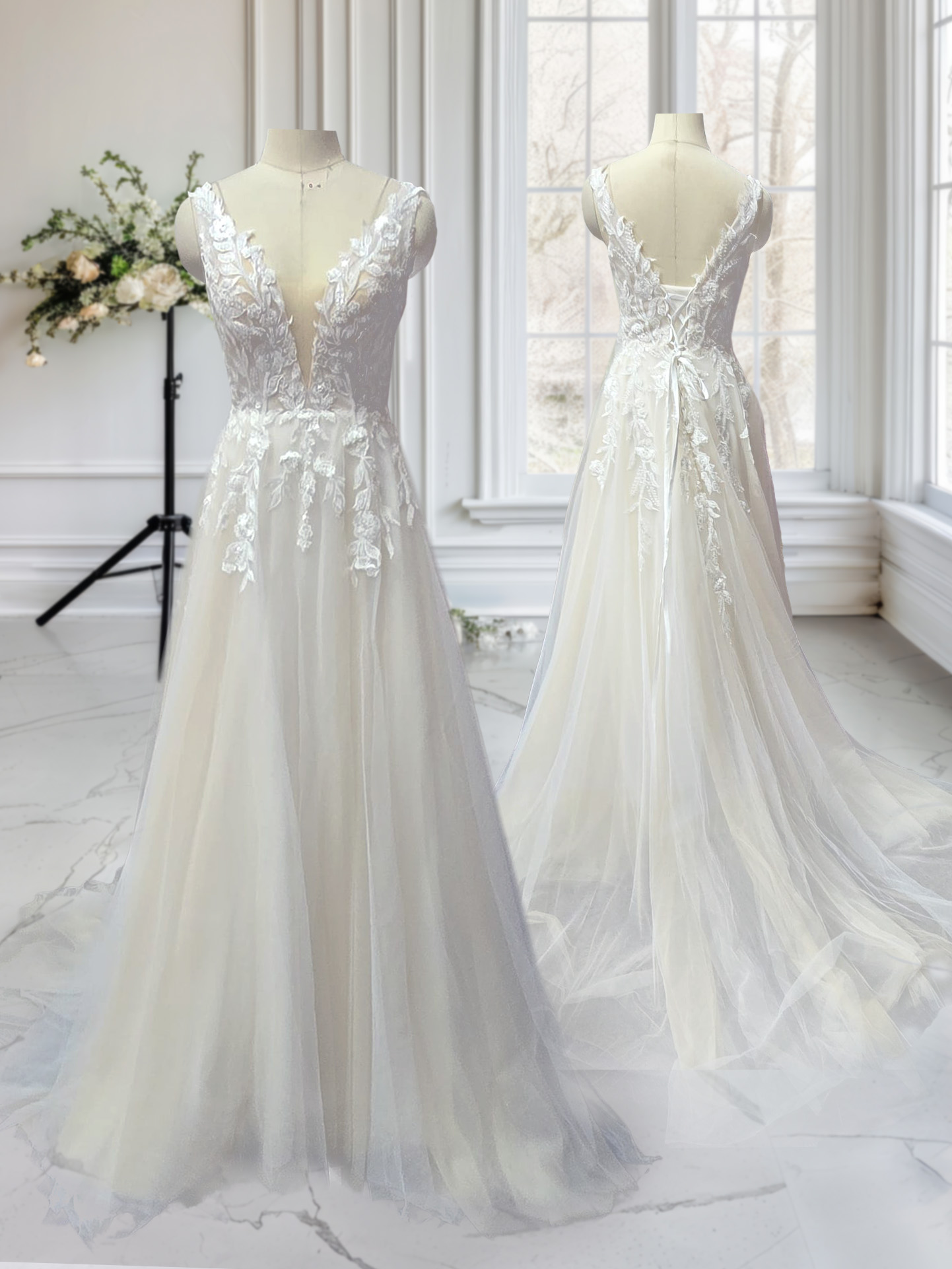
Body-shape advice often becomes unnecessarily restrictive: petites are told to avoid volume, fuller busts to avoid certain necklines and curvier brides to wear only one silhouette. These rules ignore fabric, scale, construction and the bride's desired effect.
Two brides with the same dress size can have different torso lengths, shoulder widths, waist positions and leg proportions. Two gowns both labelled A-line can also behave differently because one begins its flare at the natural waist while another holds close through the hip. Evaluate the visual relationship rather than the category name.
| Silhouette | Visual effect | Useful when you want... | What to test |
|---|---|---|---|
| A-line | Defines the upper body and opens gradually through the skirt | Versatility, movement and balanced volume | Where the flare begins and whether the skirt overwhelms the frame |
| Ballgown | Creates a defined waist and substantial formal scale | A ceremonial entrance or grand ballroom presence | Skirt weight, sitting, aisle width and the transition to table rounds |
| Fit-and-flare | Follows the body before releasing above or around the knee | Curved definition with more movement than a tight mermaid | Release point, stride and fabric tension through the hip |
| Mermaid | Holds close through the torso and thigh before a dramatic flare | Strong shape, glamour and a directional silhouette | Sitting, stairs, knee movement and whether the bodice remains secure |
| Sheath or column | Falls closer to the body with relatively little volume | Clean lines, intimate venues and easy visual restraint | Cling, lining, undergarments and whether the fabric recovers after sitting |
| Empire | Places the main seam below the bust and releases downward | A lengthened line or a softer waist treatment | Bust support and whether the seam sits at the intended point |
| Tea-length or short | Ends above the ankle or around the calf | Informality, movement, a civil ceremony or second look | Hem position, shoe visibility and whether the scale suits the venue |
Try one silhouette that contradicts your assumption. Sometimes the useful discovery is not that you love a mermaid or ballgown, but that you prefer a higher waist, less skirt volume or a different fabric within that family.
Take full-length photographs from eye level. Wide-angle phone photographs taken too close can distort proportion. Ask the stylist to step back, include the full train and capture front, side and back without posing you differently for each gown.
Wedding Gown Waistlines and Proportion
Waist placement can change the apparent relationship between torso and legs. A natural waist can create familiar balance. A raised waist can lengthen the lower body. A dropped or basque waist can elongate the torso and add drama, but its point and stiffness need to suit the bride rather than the trend image.
Look for where the eye settles. A visible belt, seam, corset point or change in embellishment creates a horizontal or directional line. If that line sits at an awkward point, the gown may feel wrong even when the overall silhouette is technically suitable.
Alterations can refine waist position only within the gown's construction. A sample with the wrong torso length may not be fixable by simply tightening it. Ask whether the made-to-measure or bespoke pattern can adjust shoulder-to-waist length, bust position and rise, not only circumference.
Wedding Gown Necklines: What Singapore Brides Should Check
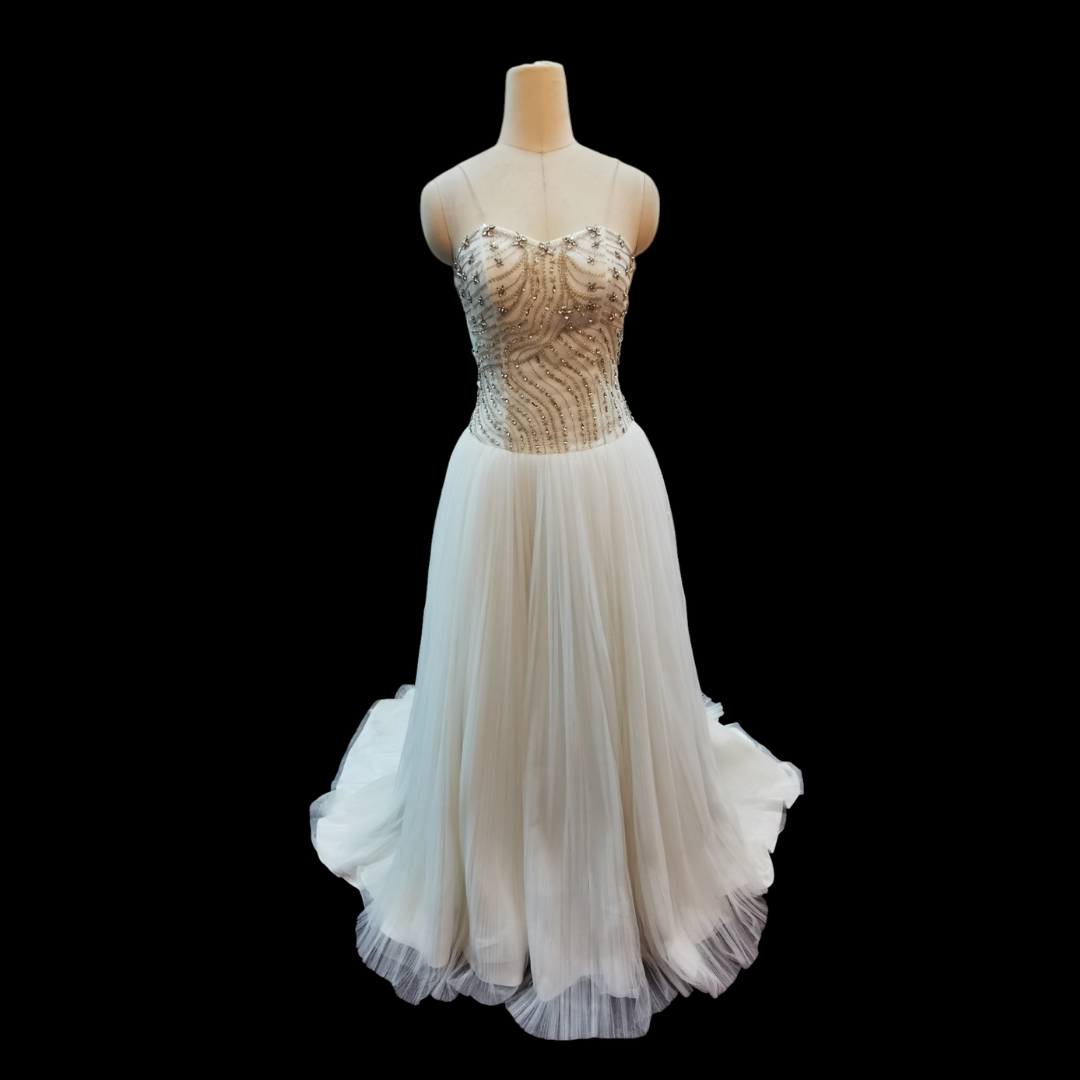
The neckline sits closest to the face and appears in many ceremony and portrait photographs. It can open, lengthen, soften or structure the upper body.
| Neckline | Typical visual effect | Fitting question |
|---|---|---|
| Sweetheart | Curved, romantic framing across the bust | Does the curve sit securely and mirror your scale rather than cutting too low or wide? |
| Straight strapless | Clean horizontal structure | Can you move and breathe without pulling it up? |
| V-neck | Creates a vertical line through the upper body | Is the depth balanced and stable from the side? |
| Square | Adds clear structure around the collarbone | Does the width balance the shoulders and sit flat? |
| Off-shoulder | Highlights collarbones and shoulder line | Can you raise your arms enough to hug, sign and move? |
| Halter | Directs attention inward and upward | Does it support the bust without shortening or crowding the neck? |
| High neck | Creates coverage and visual detail near the face | Does the fabric or lace overwhelm your features or feel warm? |
| One-shoulder or asymmetric | Adds direction and modern interest | Does it remain balanced from every camera angle? |
Take a waist-up photograph and look first at your expression and face. The neckline should support that focal point. Then turn sideways, sit and raise your arms. A neckline that photographs beautifully but needs constant checking has failed the movement test.
Support is a construction issue, not a moral rule about coverage. Confirm cups, boning, straps, tape or undergarment options with the actual gown. Do not assume a sample that is clipped tightly will behave the same after alteration.
Wedding Gown Colour in Singapore Lighting
Bridal white includes bright white, soft white, ivory, cream, champagne, blush, nude linings and layered combinations. Lace can also appear warmer or cooler depending on the base beneath it.
Judge the relationship between gown and complexion. Bright white may look crisp and graphic; ivory can feel softer; champagne or nude layers can deepen lace and create warmer contrast. The goal is not to assign every bride a seasonal colour rule. It is to notice whether the face looks clear and present.
Lighting changes the result. A gown may look warm under boutique spotlights, cool beside a window and more reflective under ballroom LEDs or camera flash. Ask to stand near natural light if available. Photograph the gown beside the face without a beauty filter and compare the same image exposure across options.
A current Weddingserv colour analysis consultation from L'Atelier K Image Consultancy is listed at S$460 and includes a personalised wallet of 36 fabric samples. This is an optional tool, not a prerequisite. It may be useful when a bride is repeatedly torn between ivory, champagne, lining and accessory colours and wants a structured reference beyond the fitting room.
Fabric, Texture and Photography: Why the Same Silhouette Changes
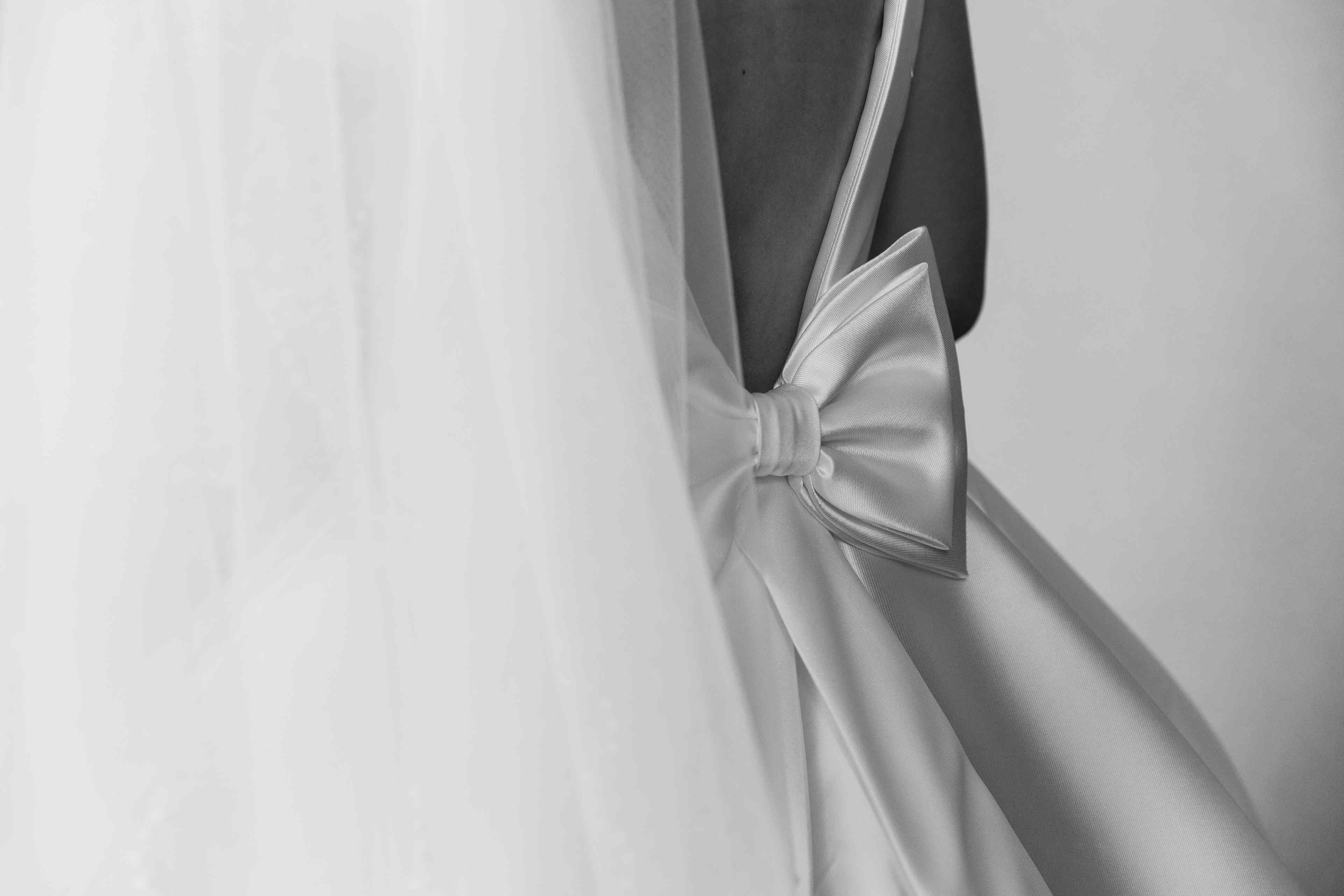
A crepe sheath, lace sheath and beaded sheath share a broad silhouette but create different visual weight. Clean satin reflects light and reveals construction. Matte crepe can feel modern and refined but may show tension. Tulle creates air and volume. Lace adds surface rhythm. Beading can catch evening light while adding weight and texture.
Touch the gown, but also watch it move. Walk toward the mirror, turn slowly and sit. Does the skirt return cleanly, collapse, crease or catch? Does the lace feel soft against the arm? Does beading irritate the underarm? Are multiple layers comfortable in Singapore humidity?
The Meteorological Service Singapore reports mean annual relative humidity of about 82 percent for the 1991-2020 reference period. That does not prescribe a fabric, but it makes weight, lining and ventilation relevant for outdoor solemnisations, gardens, HDB arrival photographs and transfers between venues.
Photography style also changes what receives attention. Timeless photography may favour clean proportion and enduring detail. Editorial images may emphasise structure, unusual necklines or a dramatic train. Photojournalistic coverage reveals how the gown behaves when the bride is not posing. Use the wedding photography styles guide to align the gown with the way the day will be photographed without choosing a dress only for pictures.
How Singapore Wedding Venues Should Influence the Gown
The gown does not need to match the venue literally, but it should work at the venue's scale and through its practical routes.
| Wedding setting | Gown direction that may work | Practical test |
|---|---|---|
| Hotel ballroom | Structured satin, formal lace, ballgown, fit-and-flare or editorial shape | Can the train move through the stage, tables, lift and service routes? |
| Outdoor solemnisation | Lighter construction, manageable layers and secure details | Can it handle humidity, wind, damp ground and a sudden indoor relocation? |
| Church ceremony | Refined coverage, a longer train or traditional scale | Check aisle width, stairs, modesty expectations and bustle timing |
| Restaurant wedding | Column, A-line, compact volume or a shorter train | Sit at the actual table distance and test circulation |
| Glasshouse | Airy fabric, controlled volume and texture that works in daylight | Test warmth, transparency and how the gown reads after sunset |
| Tea ceremony at home | Cheongsam, kua or a gown with easy movement | Allow time and space for changing, kneeling, sitting and family photographs |
The wedding venue decor guide can help identify sightlines, ceiling scale, lighting and access conditions. A large train may be visually justified in a wide ballroom but operationally difficult in a narrow restaurant. A plain room may support a sculptural gown, while an ornate ballroom may reward cleaner styling.
Visit the venue route mentally: preparation room, car, lift, ceremony entrance, signing table, portrait location, reception entrance and guest tables. A gown that belongs in only one photograph may not be the best gown for the whole day.
The Wedding Gown Movement Test
Standing still is not the wedding. During a Singapore celebration, a bride may sit for hair and makeup, climb into a car, bow or kneel during a tea ceremony, walk an aisle, sign documents, pose outdoors, enter a ballroom, greet tables and dance.
Test the gown in the closest safe approximation:
- Sit for at least one minute and check the bodice, waist and skirt.
- Walk at normal pace, then turn without arranging the train first.
- Raise both arms enough to hug someone and reach a signing table.
- Step onto a low platform or stair when the boutique permits.
- Practise the bustle or train loop and ask who will secure it.
- Take a side and back video while moving rather than posing.
- Notice heat, scratching, slipping, pressure or restricted breathing.
- Repeat the test in the shoes and undergarments planned for the day.
Comfort does not mean the gown must feel like casual clothing. Formal structure can feel secure and supportive. The warning sign is not awareness of the gown; it is constant management of it.
Why the Same Wedding Gown Looks Different on Every Bride
The gown interacts with the person wearing it. Proportion, posture, shoulder angle, bust position, skin tone, hair, face, styling and movement all change the result. The sample itself may also fit each bride differently because clips alter the back, waist and neckline.
This is useful information, not a judgement. When a saved gown does not create the expected effect, the body has not failed the dress. The fitting has revealed which design job needs to change: perhaps the waist should rise, the neckline should open, the skirt should release earlier or the colour should become softer.
Ask, "What should the gown do for me?" Useful answers include framing the face, defining the waist, lengthening the line, adding softness, creating formal scale or making movement feel easy. That answer is more actionable than trying to reproduce another bride's image.
Alterations, hair, veil and posture can improve the relationship, but do not rely on styling to rescue a gown whose central proportion feels wrong. The base gown should already be persuasive.
Real Weddingserv Example: Same Price, Different Design Decision
Current listings show why price alone cannot identify the gown that suits you.
| Current listing | Listed price | Dominant design features | Decision to test in person |
|---|---|---|---|
| Zion Creation white bustier pleated gown | S$1,888 | Hand-beaded bustier, silver rhinestones, full sunray-pleated skirt, train and optional cancan | Strapless support, waist position, skirt scale, sparkle near the face and sitting space |
| Amoure Bridal A-line lace gown | S$1,888 | Flowing A-line skirt, lace and plunging neckline; listing states customisation is available | Neckline depth, lace scale, torso length, support and how the skirt begins its flare |
| K Gown long-sleeve mermaid rental | S$450 | Ready-wear mermaid shape, long sleeves and beaded lace | Sleeve mobility, hip and knee release, sample condition and alteration capacity |
The first two listings share a current S$1,888 headline price but offer different silhouettes, necklines and surface treatments. Neither is more suitable in the abstract. A bride choosing between them should apply FRAME: identity, proportions, face framing, movement and venue.
Prices and listing descriptions were rechecked on 7 August 2026 and may change. Verify availability, measurements, customisation, GST, alteration scope and the final written quotation before booking.
How to Prepare for a Wedding Gown Appointment
An effective appointment begins before the first dress. Send the boutique your wedding date, venues, likely outfit changes, budget range and preferred service model. Share a small edit of references, ideally five to ten complete gowns, and explain what you like in each one.
Wear simple, suitable undergarments and bring shoes close to the intended heel height. Tie or clip the hair in a way that lets you see the neckline. Bring any heirloom jewellery, veil or cultural accessory that will materially affect the look, but avoid carrying every possible styling option into the first session.
Ask the stylist to choose one evidence-gathering gown outside your shortlist. If you believe you dislike volume, try one controlled A-line or ballgown. If you assume sleeves are necessary, compare an open neckline with proper support. The purpose is not to create confusion; it is to test a rule before building the shortlist around it.
Limit the number of decision-makers. Bring people who notice your comfort and listen to your criteria. A useful companion says, "Your posture looks relaxed in this one." A less useful comment is, "This is the dress I would wear."
Use a Consistent Wedding Gown Fitting Scorecard
Photographs and memory are unreliable after several appointments. Score each serious gown against the same factors within a few minutes of trying it.
| Criterion | Score from 1-5 | Evidence to record |
|---|---|---|
| Identity | Three words describing how you feel, not how the gown is marketed | |
| Proportion | Waist position, neckline scale, skirt balance and full-length photo | |
| Face and colour | Waist-up photo in neutral and natural light where possible | |
| Support and comfort | Slipping, pressure, scratching, heat and undergarment needs | |
| Movement | Sitting, walking, turning, arms, stairs and bustle | |
| Venue and schedule | Ceremony, portraits, transport, dinner and outfit changes | |
| Alteration confidence | What must change, whether it is possible and who will do it | |
| Personal certainty | Would you choose it without the guests' votes or a discount deadline? |
Do not average the score blindly. Decide which two criteria are non-negotiable. A gown that scores highly overall but fails movement may still be wrong for a multi-location day. A gown that is nearly perfect but needs an achievable neckline adjustment may remain a strong choice.
Review photos later that day and once more the next morning. A dramatic gown may dominate in the appointment but lose appeal when the energy fades. A quieter gown may become more convincing when you notice your face, posture and movement rather than the dress alone.
When Bodyline, Colour or Bridal Styling Advice Helps
Professional advice is optional. It is most useful when it resolves a defined uncertainty rather than adding another opinion.
A current bodyline analysis with personal report from L'Atelier K Image Consultancy is listed at S$460 and includes visual examples of recommended dress cuts. The same vendor currently lists a private bridal styling consultation at S$460. These services may help a bride who wants a structured starting point before boutique appointments.
The consultant should explain effects and options, not issue prohibitions. "This waist placement lengthens the lower body" is useful. "Your body type cannot wear this" is not. The bride's identity, comfort and desired effect remain part of the decision.
Choosing Gowns for a Multi-Event Singapore Wedding
One trend visible across Singapore planning is the wardrobe approach: a main ceremony gown, a tea ceremony outfit and sometimes a reception or after-party change. This can solve competing needs, but it can also consume budget and time without improving the day.
Give every outfit a job. The ceremony gown may create presence and formal photographs. The tea ceremony look may express family or cultural meaning. The reception gown may reduce weight and improve movement. If two gowns serve the same job, ask whether one stronger choice would be better.
Repeat one element across the wardrobe to maintain coherence: colour temperature, neckline shape, jewellery, floral detail or clean tailoring. The outfits do not need to match, but they should feel chosen by the same person.
Use the wedding schedule to check feasibility. Every change needs a room, helper, garment organisation, hair plan and enough time. A ten-minute change is rarely ten minutes once travel, fastening, photography and touch-ups are included.
Why Wedding Gown Research Becomes Confusing
Brides often save hundreds of images without recording the boutique, gown model or service type. Instagram is useful for inspiration but poor at comparing whether a design is rental, purchase or custom. One boutique describes silhouettes; another promotes packages; a third provides starting prices with few inclusions. The result is more tabs, more enquiries and less clarity.
Weddingserv helps move the search from inspiration to comparison through bridal vendor profiles, current gown listings and the wedding inspiration library. Apply FRAME before shortlisting so the platform is used to find relevant options, not simply accumulate more gowns.
When the shortlist still contains incompatible services or styles, ask for a 1:1 vendor comparison and bring the same fitting criteria to every conversation. The fitting remains essential; the platform reduces the research work before it.
Wedding Gown Fit Singapore FAQ
How do I know which wedding gown silhouette suits me?
Start with the effect you want, then compare waist position, neckline scale, skirt release and movement. Try at least two contrasting silhouettes and photograph them consistently. The best result is the one that balances you and supports your identity, not the one assigned to a body-type label.
Why does the same wedding gown look different on different brides?
Body proportions, posture, skin tone, face, hair, styling and movement all change the visual relationship. Samples are also clipped differently. Use the difference to identify what your gown needs to do rather than treating the reference image as a standard your body must copy.
How many wedding gowns should I try before deciding?
There is no correct number. Five to eight well-chosen gowns in a focused appointment may teach more than dozens tried without criteria. Pause when options blur together, review the FRAME notes and return with a narrower question.
Should I choose my wedding gown before confirming the venue?
You do not need every decor detail, but you should know the venue type, ceremony setting, access and likely weather exposure. Ballroom, church, restaurant and outdoor solemnisation formats place different demands on train length, scale, fabric and movement.
Which wedding gown colour is most flattering?
The answer depends on the relationship between your complexion, the gown's base, lace and lighting. Compare bright white, ivory, champagne and lining options near the face in more than one light. Choose the colour that keeps your face clear and present.
What should I bring to a wedding gown fitting?
Bring suitable undergarments, shoes near the expected heel height, hair clips and a phone for consistent photographs and video. Bring a small set of references and any heirloom accessory that materially affects the neckline or colour decision.
Can a wedding gown be beautiful if it is not comfortable?
Formal gowns may feel structured, but they should still allow the actions your wedding requires. If you cannot sit, breathe, hug family or move safely, the design or fit needs reconsideration. Comfort supports posture and confidence; it is part of appearance, not separate from it.
Do I need a bridal stylist or image consultant?
No. Many brides make excellent decisions with a skilled boutique stylist and a clear framework. Independent advice may help when silhouette, colour or style uncertainty is delaying every appointment. Use it to understand options, not to replace your own judgement.
Final Wedding Gown Selection Checklist
Before confirming, review the gown without appointment pressure. Check that the silhouette balances your proportions, the neckline frames your face, the colour works in realistic light and the construction supports you. Complete the movement test in planned shoes and confirm how alterations will address any remaining issue.
Then place the gown in the wedding day. Can it travel, enter the venue, handle the ceremony, move through portraits and remain comfortable at dinner? Does it still feel like you when the veil, trend language and other people's votes are removed?
The right gown does not need to be universally flattering or universally popular. It needs to create the intended relationship between bride, garment and wedding. FRAME gives that relationship a practical test.
Once the style decision is clear, use the companion wedding gown cost and buying guide to compare rental, purchase, made-to-measure and bespoke quotations on equal terms.
Source Notes
- Singapore humidity information is from the Meteorological Service Singapore climate overview using the 1991-2020 reference period.
- The FRAME framework, movement test, fitting scorecard and appointment method are Weddingserv editorial tools, not clinical body-analysis standards or national market averages.
- Weddingserv prices and listing descriptions were rechecked against the linked pages on 7 August 2026. Listings may change; verify availability, measurements, alterations, GST treatment and the final written quotation before booking.